
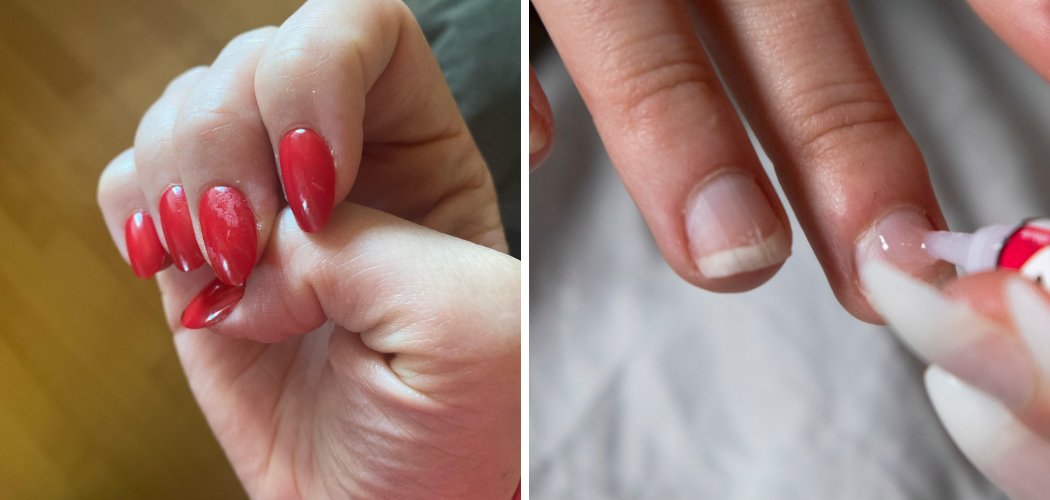
To get nail glue off nails, soak them in warm, soapy water for 10 to 15 minutes, then gently peel or roll the softened glue away with a cuticle stick. For stubborn spots, acetone-based nail polish remover works fastest, loosening the bond in just a few minutes. Never force or pry hardened glue off, since that tears the top layer of your natural nail.
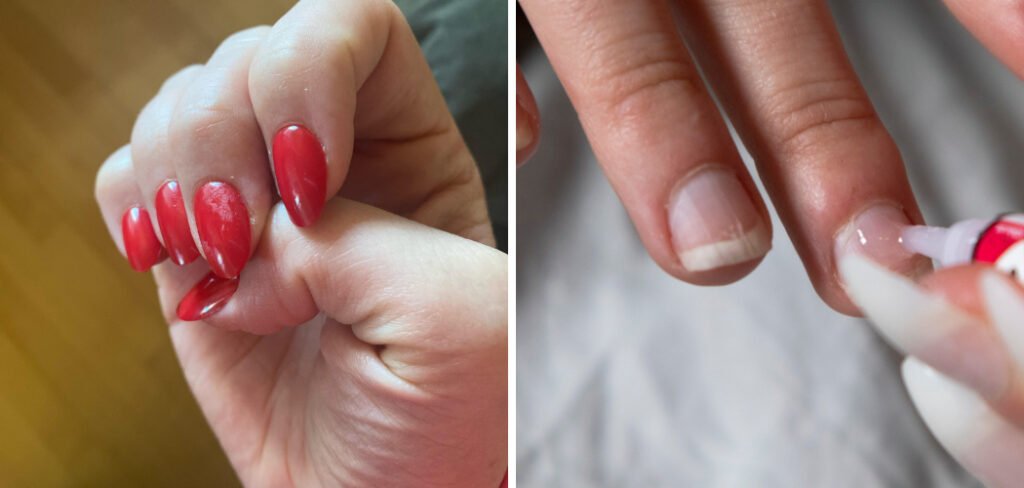
Whether you glued on press-on nails, fixed a broken tip, or had a little accident with the tube, dried nail glue can feel like it’s welded to your fingers. Below, I’ll walk you through the quickest way to dissolve it, a gentler household method, and How to Get Nail Glue off Nails.
What You’ll Need
Grab a few of these before you start. You probably already own most of them, and the rest are cheap.
- Acetone or Acetone-Based Nail Polish Remover — the fastest way to break down nail glue; pure acetone works quicker than the milder versions.
- A Small Glass Bowl — for soaking your fingertips.
- Warm Water and Dish Soap — the gentle, acetone-free route that softens glue over time.
- A Cuticle Stick or Orange Wood Stick — a slim wooden tool for nudging softened glue off the nail.
- A Nail Buffer — a soft file that smooths away thin glue residue.
- A Nail File — for shaping and cleaning up the free edge (the white part that grows past your fingertip).
- Cotton Balls or Pads — to hold acetone against each nail.
- Aluminum Foil — for the soak-and-wrap trick that speeds things up.
- Petroleum Jelly or a Rich Hand Cream — to protect the skin around your nails.
- Cuticle Oil — for aftercare, since acetone leaves nails and cuticles dry.
- A Nourishing Hand Cream — to rehydrate your hands once the glue is gone.
Keep a towel handy too, since soaking can get a little drippy.
Method 1: Acetone Soak (Fastest)
This is the go-to when the glue is thick, dried hard, or holding a press-on nail firmly in place. Acetone dissolves the adhesive so it lifts away instead of ripping.
Work in a well-ventilated room, since acetone has strong fumes. Keep it away from open flames too, as it’s flammable.
1. Protect the Skin Around Your Nails
Rub a little petroleum jelly or thick hand cream onto the skin and cuticles surrounding each nail.
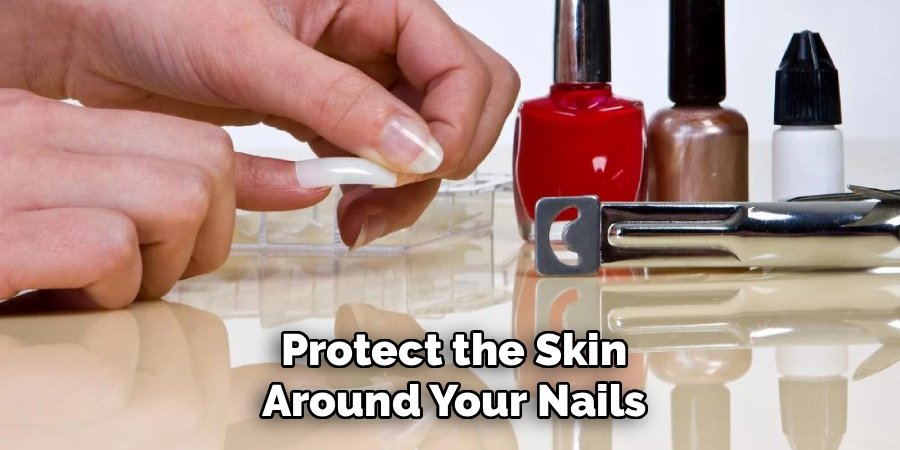
Acetone is drying, and this barrier keeps it off the delicate skin. The cuticle is the thin strip of skin at the base of your nail, and it dries out fast.
Don’t coat the nail itself, or the acetone won’t reach the glue.
2. Soak Cotton in Acetone
Dampen a cotton ball or pad with acetone-based remover until it’s saturated but not dripping everywhere.
You’ll want one piece per glued nail. If only a spot or two has glue, you can tear the cotton into smaller pieces.
3. Press and Wrap Each Nail
Lay the soaked cotton directly over the glue, then wrap the fingertip in a small square of aluminum foil to hold it in place.
The foil traps the acetone against the nail so it stays put and works faster. This is the same trick nail techs use to remove gel polish.
Let each finger sit wrapped for 10 to 15 minutes.
4. Check and Loosen the Glue
Unwrap one finger and gently wipe. The glue should feel gummy and lift easily.
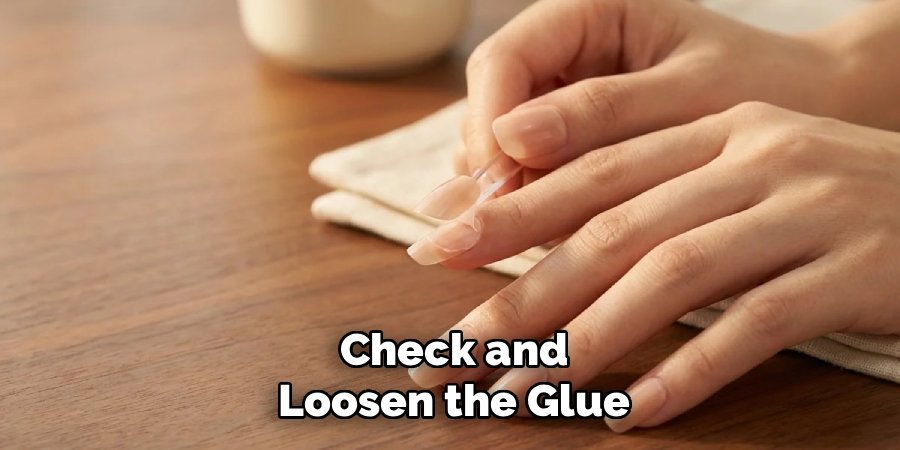
Use your cuticle stick to nudge the softened adhesive off, working from the base toward the tip. Go slow and let the acetone do the work.
If it still feels stuck, rewrap and wait another five minutes rather than forcing it.
5. Buff Away Any Residue
Once the bulk of the glue is gone, a thin cloudy film sometimes remains.
Lightly pass a nail buffer over the surface to smooth it out. Keep it gentle, since over-buffing thins your natural nail.
6. Wash and Rehydrate
Wash your hands with warm, soapy water to rinse off the acetone and any leftover residue.
Pat dry, then move straight to the aftercare steps below. Your nails will feel dry right now, and that’s normal.
Method 2: Warm Soapy Water (Gentle, No Acetone)
If you have sensitive skin, run out of remover, or you’re dealing with only a light layer of glue, this kitchen-friendly method is kinder to your nails. It takes longer but skips the harsh chemicals entirely.
1. Fill a Bowl With Warm, Soapy Water
Add a good squirt of dish soap to a bowl of comfortably warm (not hot) water.
A little oil, like olive or coconut, mixed in can help soften the glue faster. Warmth and moisture are what break the bond here.
2. Soak Your Nails for 10 to 15 Minutes
Dip your glued fingertips in and let them soak. Stay patient, since acetone-free softening takes time.
Wiggle your fingers now and then to keep the water working into the glue. Top up with warm water if the bowl cools down.
3. Gently Peel or Roll the Glue Away
Once the glue turns soft and rubbery, use your fingers or a cuticle stick to roll it off the nail.
Start at an edge and lift gently. If it resists, soak for another five minutes rather than tugging.
4. Repeat if Needed
Thick glue may need a second soak. That’s completely normal with the gentle method.
Re-dip and wait again until every trace lifts without a fight.
5. Smooth and Rinse
Lightly buff any faint residue, then rinse your hands clean.
You’ve now removed the glue without a drop of acetone, which your cuticles will thank you for.
Aftercare for Your Nails
Both methods leave nails a little dry and thirsty, especially the acetone route. A few minutes of aftercare keeps them from turning brittle or peeling.
- Flood your nails and cuticles with cuticle oil. Massage a drop into the base of each nail to restore moisture where acetone stripped it.
- Follow with a rich hand cream. Rub it in well, focusing on the fingertips and the skin around each nail.
- Skip polish for a day if you can. Letting bare nails breathe and rehydrate helps them recover faster after glue removal.
- Reapply oil that evening and the next morning. Dryness lingers, so a couple of extra rounds of hydration make a real difference.
- File any rough edges in one direction. Sawing back and forth creates tiny splits, so glide the file one way to keep the free edge smooth.
If your nails feel weak after removing press-ons, a nourishing treatment over the next week or two can help them bounce back.
What NOT to Do
Rushing glue removal is how people damage their natural nails. Steer clear of these habits.
- Don’t peel or pry off hardened glue. Forcing dry glue rips away the top layers of your nail, leaving them thin, weak, and sore. Always soften first.
- Don’t bite or pick at it. It’s tempting, but this tears the nail and pushes glue under your skin. Reach for a soak instead.
- Don’t use acetone near open cuts or irritated skin. If the skin around your nail is broken or sore, stick to the warm water method. This is general beauty caution, not medical advice.
- Don’t scrape with metal tools. Sharp metal edges gouge the nail surface. A wooden cuticle stick is far safer.
- Don’t soak longer than needed in pure acetone. Extended exposure dries and weakens nails, so pull them out as soon as the glue lifts.
- Don’t ignore a reaction. If your skin stings, turns red, or itches during removal, rinse right away and switch to the gentler method. A quick patch test on one nail first is smart if you’ve never used acetone before.
Slow and gentle always beats fast and forceful when it comes to your nails.
Frequently Asked Questions
How do you get nail glue off without acetone?
Soak your nails in warm, soapy water for 10 to 15 minutes, adding a splash of oil to help loosen the bond. Once the glue turns soft and rubbery, gently roll or peel it away with a cuticle stick. It takes longer than acetone but it’s much gentler, making it a great choice for sensitive skin or thin glue layers.
Does nail glue come off on its own?
Yes, eventually. Nail glue naturally loosens as your nail grows out and daily activities like washing and showering wear it down, usually over one to two weeks. That said, waiting it out often leads to uneven, flaky patches, so a warm soak or acetone soak gives you a cleaner, faster result.
Is it bad to peel nail glue off your nails?
Peeling hardened glue is one of the fastest ways to damage your natural nails. When you pull dried glue off, it takes the top layers of the nail with it, leaving them thin, rough, and prone to breaking. Always soften the glue with water or acetone first so it lifts away instead of tearing.
How long should you soak nails to remove glue?
Plan on 10 to 15 minutes for either method. With acetone, wrapping each nail in foil traps the remover against the glue so it works within that window. With warm soapy water, you may need a second soak of five to ten minutes for thicker glue, so check the texture before you start lifting.
Get Your Nails Glue-Free the Safe Way
Pick the method that suits your nails, soften the glue fully before lifting a thing, and finish with plenty of oil and cream so your fingers feel soft and healthy again.
